When did a loaf of bread become a status symbol? In a city where almost anything can be turned into a luxury experience, perhaps it was only a matter of time before someone decided that sourdough deserved the same treatment as a designer handbag. At RYE, a recently opened bakery in Manhattan’s SoHo neighbourhood, a loaf costs $60. A few blocks away, a cup of specialty coffee can set you back almost $50 with tip. Welcome to the latest chapter of New York’s fascination with expensive things, where the price is increasingly becoming as important as the product itself.
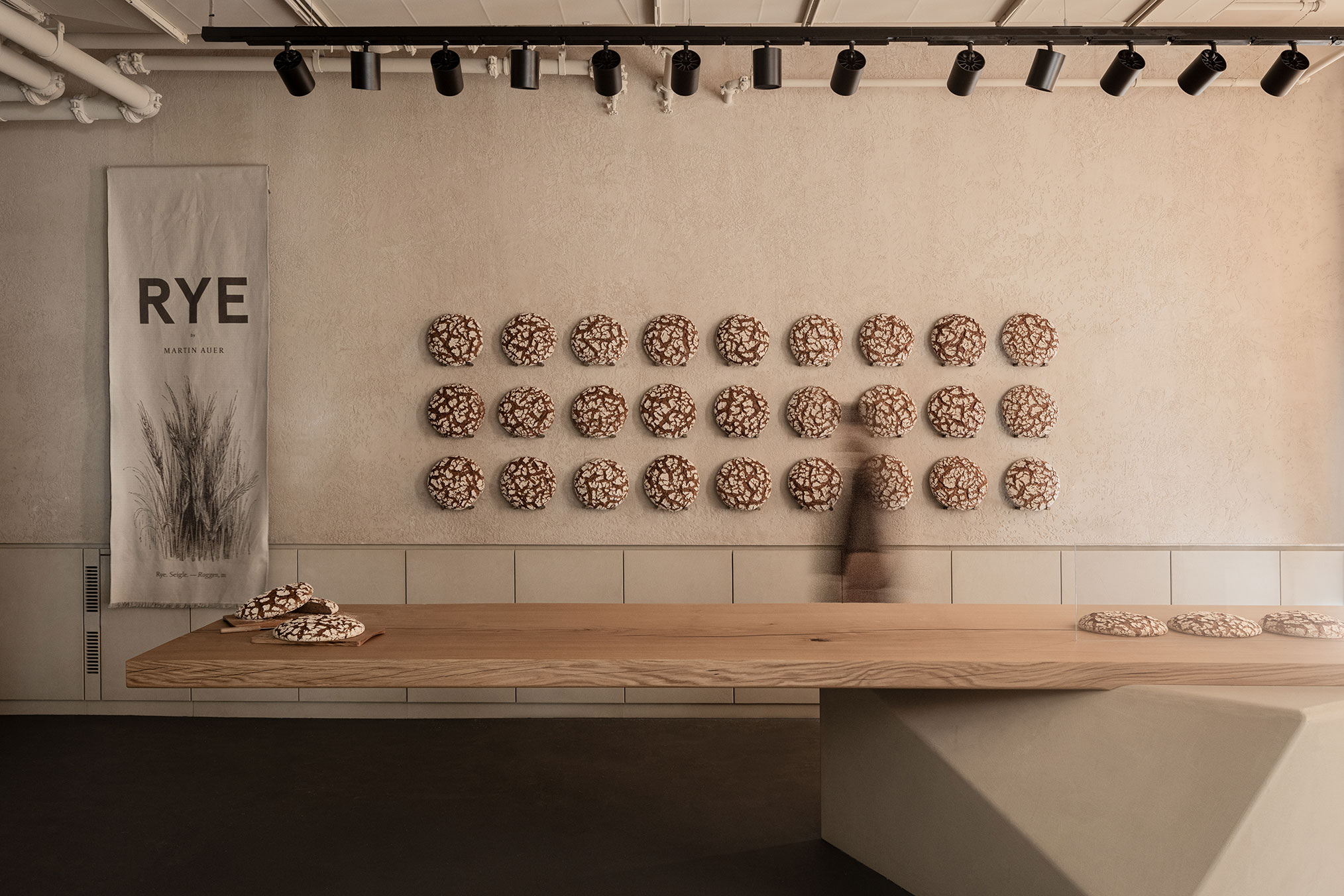
The controversy began in September, when Austrian bakery Martin Auer opened its first American location on Lafayette Street. Its concept is almost aggressively simple: one type of bread, made from organic Austrian rye flour, water, salt, and a sourdough culture maintained by the family for more than half a century. The approximately 1.5-kilogram loaf undergoes a lengthy fermentation process before emerging from a custom-built oven. The bakery, with its minimalist interior and carefully arranged displays, looks more like a contemporary design showroom than a neighbourhood bread shop. The price, naturally, became the attraction. Within weeks, RYE had generated the kind of publicity most businesses could only dream of. Social media filled with reactions ranging from genuine curiosity to outright disbelief, while newspapers attempted to determine whether the bread was exceptionally good or simply exceptionally expensive. The answer, according to several critics who actually tried it, was somewhere in between.
Then came Sober Facts, a New York food reviewer whose confrontational videos have turned the city’s most extravagant food offerings into a form of street-level consumer criticism. After purchasing the $60 loaf, he struggled to tear it apart, dismissed its taste, and returned to the bakery demanding a refund. His verdict was considerably less diplomatic than those of the professional food critics. In another video, he visited Arcane Estate Coffee in the West Village, where a rare Panamanian coffee cost $38, or $47 after tip. Once again, the experience failed to live up to his expectations. The videos are entertaining, but their popularity reveals something more interesting than the questionable economics of expensive carbohydrates. They expose a growing tension between two opposing cultural attitudes: the celebration of artisanal craftsmanship and the suspicion that almost everything marketed as exceptional has become another opportunity to extract money from consumers.
To be fair, neither establishment is necessarily selling an ordinary product at an arbitrarily inflated price. RYE’s bread is unusually large, made with imported ingredients, and produced through a labour-intensive process. Customers can also purchase smaller portions for $15 or $30. Arcane Estate Coffee specializes in Panamanian micro-lots, a category of coffee whose scarcity, cultivation, and processing can command extraordinary prices among enthusiasts. These distinctions matter. A rare coffee can be appreciated much like a fine wine, and traditional breadmaking is a craft worth preserving. But there is a difference between recognising craftsmanship and transforming it into a spectacle of exclusivity.
What makes RYE particularly revealing is how effectively it borrows the visual and commercial language of luxury fashion. The limited product selection, minimalist architecture, carefully staged production process, and emphasis on provenance all communicate the same message: this is not simply bread, but an object worthy of contemplation. The customer is invited to appreciate its history, ingredients, and production before even taking a bite.
It is a familiar strategy. Luxury brands have long understood that value is not determined exclusively by utility or material quality. Scarcity, storytelling, and cultural association can be equally powerful. A designer handbag does not necessarily carry belongings better than an ordinary one, just as a $60 loaf does not necessarily make better toast. What matters is the meaning attached to the object, and the social distinction that comes with owning it.
The interesting development is that this logic has increasingly migrated into everyday consumption. Coffee, bread, olive oil, chocolate, and even bottled water have become vehicles for expressing taste, identity, and cultural sophistication. The ordinary is elevated into the extraordinary, provided it comes with the right aesthetic and a sufficiently convincing narrative.
New York is particularly receptive to this transformation. Its extraordinary concentration of wealth, tourists, creative professionals, and status-conscious consumers creates a market in which even the most improbable concepts can find an audience. High commercial rents also encourage businesses to pursue premium pricing, while the city’s enormous cultural visibility makes an unusual product instantly accessible to a global audience. Yet this is hardly an exclusively New York phenomenon. Similar ideas have flourished in London, Copenhagen, Tokyo, and other cities where design-conscious consumption has become part of urban identity. What distinguishes New York is perhaps the speed with which these businesses become cultural events. A bakery can open in September and become an international talking point before October. The product is almost secondary to the conversation surrounding it. Social media has fundamentally altered the economics of this process. A $60 loaf might discourage an ordinary customer, but it provides an irresistible premise for a TikTok video. The higher the price, the greater the potential for disbelief, criticism, and engagement. In this environment, even negative attention can become commercially valuable. People who would never consider spending $60 on bread may nevertheless visit the bakery out of curiosity, while others purchase it precisely because it has become controversial.
The irony is that Sober Facts, despite positioning himself as a critic of excessive pricing, also participates in the same economy of attention. His outrage gives the establishments visibility, while their prices provide him with compelling content. Both sides benefit from the encounter, even when the transaction ends in confrontation. This does not mean that outrage automatically translates into a sustainable business. Initial reports suggested that RYE was selling almost all its bread each day, but viral popularity is not the same as long-term commercial viability. A bakery built around a single premium product faces a particular challenge: convincing customers to return once the novelty has disappeared. The economics become even more complicated when expensive retail space, specialised equipment, imported ingredients, and skilled labour are involved. A high selling price does not necessarily guarantee a high profit margin.
There is also the question of what these businesses represent within the wider urban landscape. New York has always accommodated extraordinary wealth alongside economic precarity, but the increasing luxury positioning of everyday necessities makes that contrast particularly visible. Bread has historically been one of the most democratic foods, associated with nourishment, community, and basic sustenance. Transforming it into an object of conspicuous consumption inevitably raises questions about who contemporary cities are being designed to serve. Still, it would be too easy to dismiss RYE as another symptom of urban inequality or late-capitalist absurdity. There is something genuinely appealing about a business committed to producing one traditional product exceptionally well. In a food industry dominated by standardisation, industrial efficiency, and endless product variations, such dedication deserves recognition. The problem begins when craftsmanship becomes inseparable from exclusivity, and when the cultural value of a product is measured primarily through its price.
Perhaps the most revealing aspect of the controversy is that nobody seems particularly interested in discussing bread anymore. The conversation has shifted towards affordability, authenticity, privilege, and the increasingly blurred boundaries between consumption and performance. Whether the loaf is worth $60 has become almost impossible to answer because different customers are purchasing entirely different things. Some want exceptional bread. Others want the experience, the story, or simply the opportunity to say they have tried it. In this sense, RYE is less an anomaly than an unusually transparent example of contemporary consumer culture. We increasingly buy products not only for what they do, but for what they communicate about us. The objects themselves become props in the construction of personal identity, while their prices serve as shorthand for cultural significance.
The real test will come when the cameras disappear. Whether RYE can turn its viral moment into a viable business remains to be seen. The real challenge is not convincing people to spend $60 on bread once, but giving them a reason to do it again. After all, New York has an impressive appetite for the absurdly expensive, but a considerably shorter attention span. For now, the $60 loaf has achieved something remarkable. It has transformed one of humanity’s oldest and simplest foods into a debate about class, authenticity, craftsmanship, and the economics of attention. And perhaps that is the strangest part of the story. In a culture increasingly obsessed with extraordinary experiences, even a loaf of bread must apparently justify its existence by becoming something more than bread.